Get a Free Quote

Our representative will contact you soon.
Name
Email
Tel
Company Name
Message
0/1000
fully electric hospital bed-0

Home > 

fully electric hospital bed

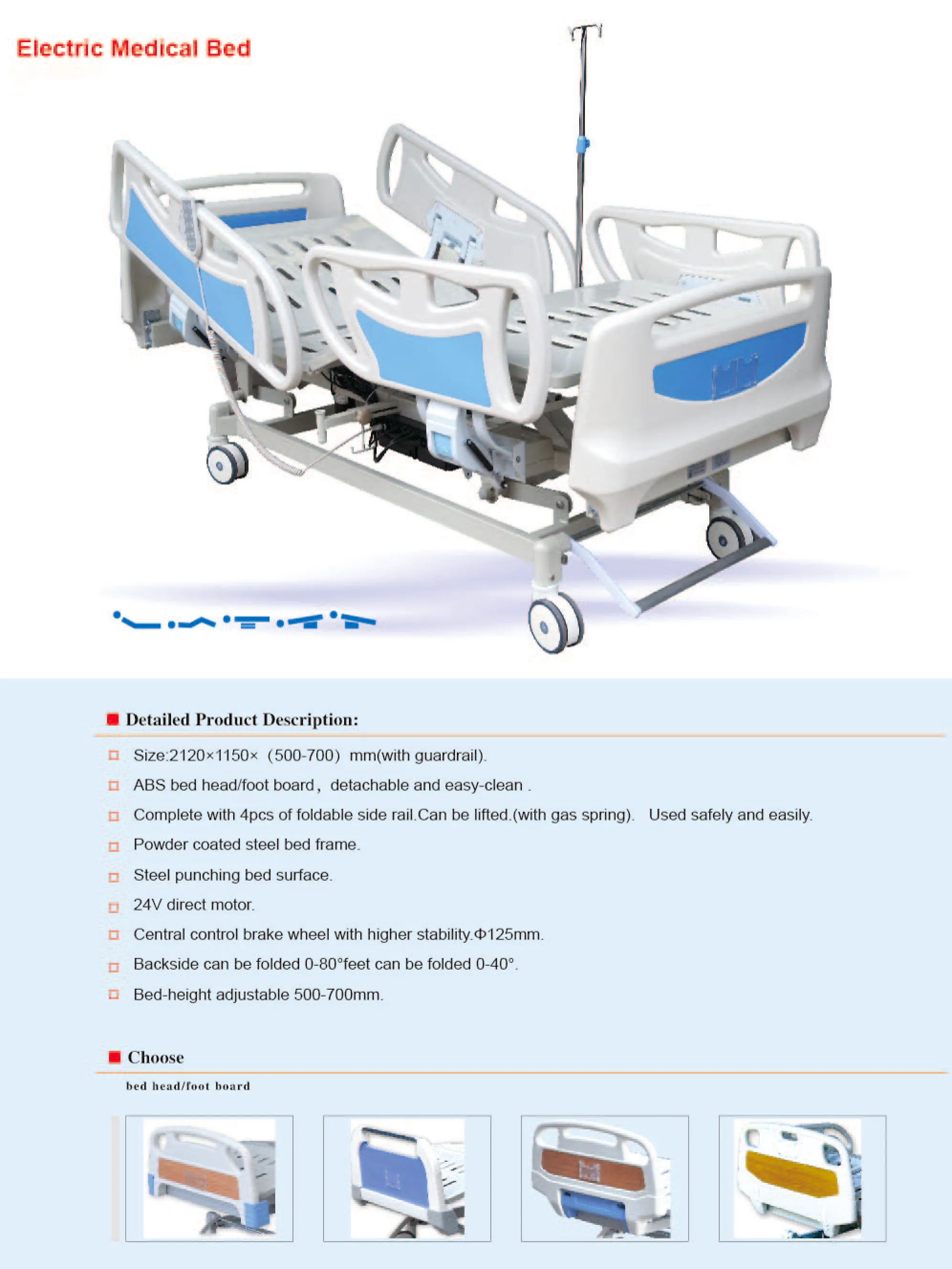
A fully electric hospital bed is a powered patient care platform designed to improve comfort, positioning, safety, and daily clinical work. A fully electric hospital bed uses motors and a handheld or side-mounted controller to adjust the backrest, knee section, overall height, and often the bed angle. A fully electric hospital bed lets patients or caregivers make smooth changes without manual cranking. Most models include a strong steel frame, a pressure-support mattress platform, locking casters, protective side rails, and a lifting capacity suited to routine hospital care. A fully electric hospital bed may also include a CPR release, emergency lowering system, drainage bag holders, an IV pole socket, and removable head and foot boards. A fully electric hospital bed supports safer transfers because staff can raise the sleeping surface to a comfortable working level. Lowering the frame helps patients enter or leave the bed with less effort. The fully electric hospital bed can raise the backrest for eating, reading, breathing support, or communication. It can lift the knees to improve posture and reduce sliding. A fully electric hospital bed with trendelenburg or reverse trendelenburg positioning gives trained staff additional support during selected procedures. Fully electric hospital bed controls may include a nurse lockout function that limits patient access to selected movements. A fully electric hospital bed can also use angle indicators, battery backup, weighing systems, exit alarms, and integrated lighting. These features make the fully electric hospital bed suitable for acute wards, rehabilitation rooms, long-term care, recovery centers, and home healthcare. Buyers should compare dimensions, safe working load, motor quality, rail design, cleaning access, warranty terms, and replacement parts before choosing a fully electric hospital bed.

New Products

The main advantage of a fully electric hospital bed is simple, independent positioning. A patient can use a clearly marked handset to adjust posture, while a caregiver can change the working height quickly. A fully electric hospital bed reduces repeated lifting and bending, which helps staff protect their backs during routine care. A fully electric hospital bed also supports better comfort during meals, rest, examinations, and therapy. The fully electric hospital bed gives a patient more control without requiring constant assistance for basic adjustments. For facilities, a fully electric hospital bed can improve workflow. Staff can raise the platform for wound care, washing, dressing, and transfers, then lower it for safe entry or exit. A fully electric hospital bed helps create a consistent care position across different shifts, reducing unnecessary movement and delays. A fully electric hospital bed with lockable wheels stays stable during care but remains easy to move when a room needs cleaning or a patient needs transport. Safety rails, an emergency release, and a low-height setting provide useful protection against falls and delayed response. A fully electric hospital bed with battery backup continues essential movement during a short power interruption, depending on the model and battery condition. This feature can be valuable in busy wards and home settings. A fully electric hospital bed suits hospitals, nursing homes, rehabilitation facilities, clinics, and private residences because its powered adjustments adapt to different care levels. Buyers should match the bed to patient weight, room size, mattress type, cleaning routine, and available electrical supply. The best fully electric hospital bed balances useful functions with easy operation, durable construction, accessible service, and a clear warranty. Choosing the right fully electric hospital bed can lower daily handling effort while supporting a more dignified patient experience.

Latest News

Dimenhydrinate tablet market access in Japan: can suppliers support PMDA onsite inspection?

22

Jul

Dimenhydrinate tablet market access in Japan: can suppliers support PMDA onsite inspection?

Japanese pharmaceutical market access for dimenhydrinate 50 mg tablets requires rigorous regulatory compliance through the Pharmaceuticals and Medical Devices Agency (PMDA) approval process. International suppliers seeking to commercialize dimenhydri...
View More
Southeast Asian OTC pharmacy chains sourcing dimenhydrinate: multilingual packaging design required.

15

Jul

Southeast Asian OTC pharmacy chains sourcing dimenhydrinate: multilingual packaging design required.

Southeast Asian over-the-counter pharmacy chains face unique challenges when sourcing dimenhydrinate products, particularly regarding multilingual packaging requirements that meet diverse regulatory standards across the region. The growing demand for...
View More
Rising pediatric anti-nausea market: collaboration opportunities for dimenhydrinate 25mg development.

01

Jul

Rising pediatric anti-nausea market: collaboration opportunities for dimenhydrinate 25mg development.

The pediatric anti-nausea pharmaceutical market is experiencing unprecedented growth as healthcare providers increasingly recognize the unique challenges of treating nausea and vomiting in children. While adult formulations like dimenhydrinate 50 mg ...
View More
A framework for evaluating customized slitting solution vendors.

01

Sep

A framework for evaluating customized slitting solution vendors.

Selecting the right vendor for a rewinding or slitting machine is one of the most critical decisions a manufacturing facility can make. The quality, reliability, and customization capability of your rewinding or slitting machine directly impact produ...
View More

Get a Free Quote

Our representative will contact you soon.
Name
Email
Tel
Company Name
Message
0/1000

fully electric hospital bed

Independent Positioning and Easier Daily Care

Independent Positioning and Easier Daily Care

A fully electric hospital bed gives patients and caregivers direct control over essential positions. With one handset, a user can raise the back, lift the knees, adjust the overall height, or return the platform to a low setting. A fully electric hospital bed makes these movements smooth and gradual, helping users find a comfortable position for sleeping, eating, reading, breathing, or therapy. A fully electric hospital bed also reduces the need for staff to turn a manual crank repeatedly. This matters in busy rooms where small delays can accumulate across many patients. The fully electric hospital bed allows staff to bring the mattress to waist level for dressing, cleaning, and clinical checks, supporting safer body mechanics. A fully electric hospital bed can include patient controls plus a caregiver control panel with lockout options. This arrangement gives patients useful independence while allowing trained staff to manage movement during treatment. For families, the fully electric hospital bed can make home recovery less demanding and more comfortable.
Safety Features That Support Confident Transfers

Safety Features That Support Confident Transfers

A fully electric hospital bed is designed to support safer movement before, during, and after a transfer. A low-height setting reduces the distance a patient must step or slide when getting up. A fully electric hospital bed can rise to a suitable working height, helping caregivers avoid deep bending while assisting with hygiene, dressing, or repositioning. A fully electric hospital bed with split side rails gives protection and still leaves access for care, although staff should use rails according to the care plan. A fully electric hospital bed may include locking casters, a secure brake indicator, an emergency CPR release, and an exit alarm. These options help staff respond quickly and keep the frame stable. A fully electric hospital bed with a battery reserve can preserve important adjustments when mains power is temporarily unavailable. A fully electric hospital bed also supports clearer handovers because common positions and safety checks are easier to reproduce. Buyers should check rail gaps, control lockouts, alarm settings, and emergency functions before purchase. A fully electric hospital bed adds practical safety without making normal operation complicated.
Flexible Performance Across Care Environments

Flexible Performance Across Care Environments

A fully electric hospital bed can serve many settings without requiring separate equipment for every stage of recovery. In an acute ward, a fully electric hospital bed supports frequent repositioning, examinations, and emergency preparation. In rehabilitation, a fully electric hospital bed helps users practice sitting, standing, and transferring at a controlled height. A fully electric hospital bed can also suit long-term care, where comfort, reliable adjustment, and easy cleaning affect daily satisfaction. For home care, a fully electric hospital bed provides hospital-style positioning in a familiar room, provided the space has enough clearance and a suitable power outlet. A fully electric hospital bed may accept an IV pole, overbed table, trapeze handle, oxygen holder, or drainage accessory, depending on its design. A fully electric hospital bed with a removable mattress platform can simplify sanitation and inspection. A fully electric hospital bed should be selected according to safe working load, mattress compatibility, doorway width, floor protection, noise level, and service support. This practical flexibility helps buyers protect their investment while matching equipment to changing patient needs. A fully electric hospital bed is most valuable when its features fit real care routines.

Get a Free Quote

Our representative will contact you soon.
Name
Email
Tel
Company Name
Message
0/1000

Get a Free Quote

Our representative will contact you soon.
Name
Email
Tel
Company Name
Message
0/1000