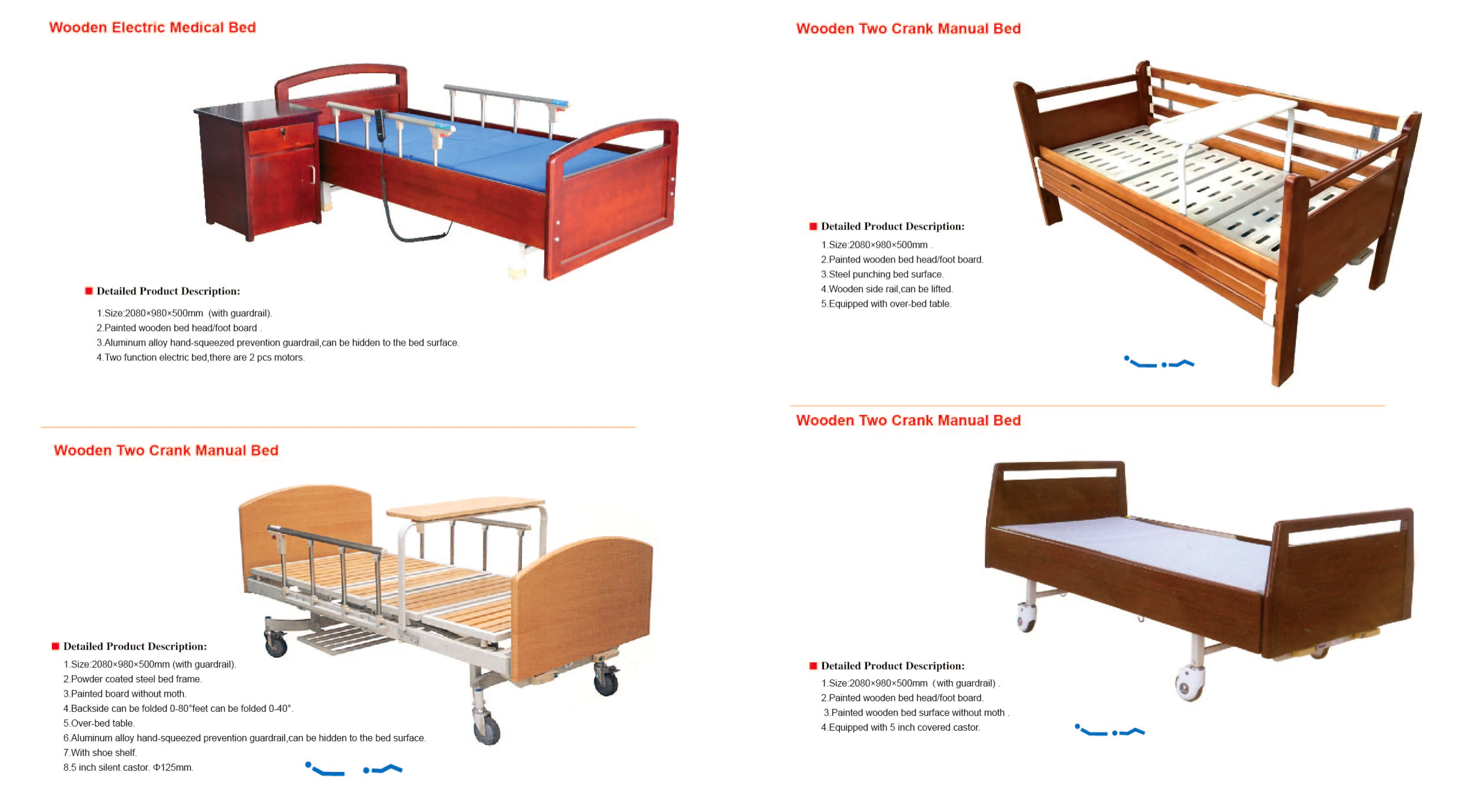
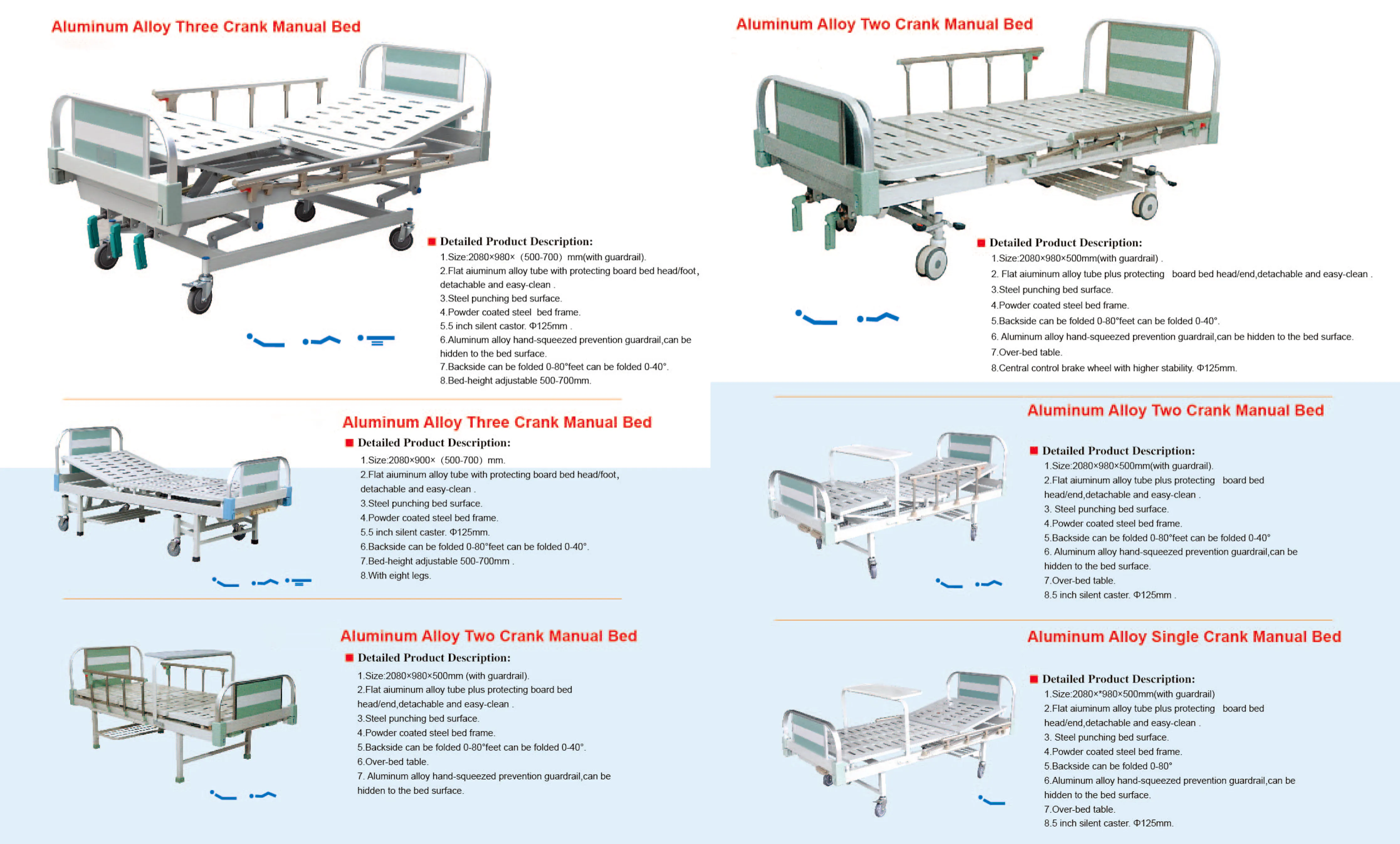
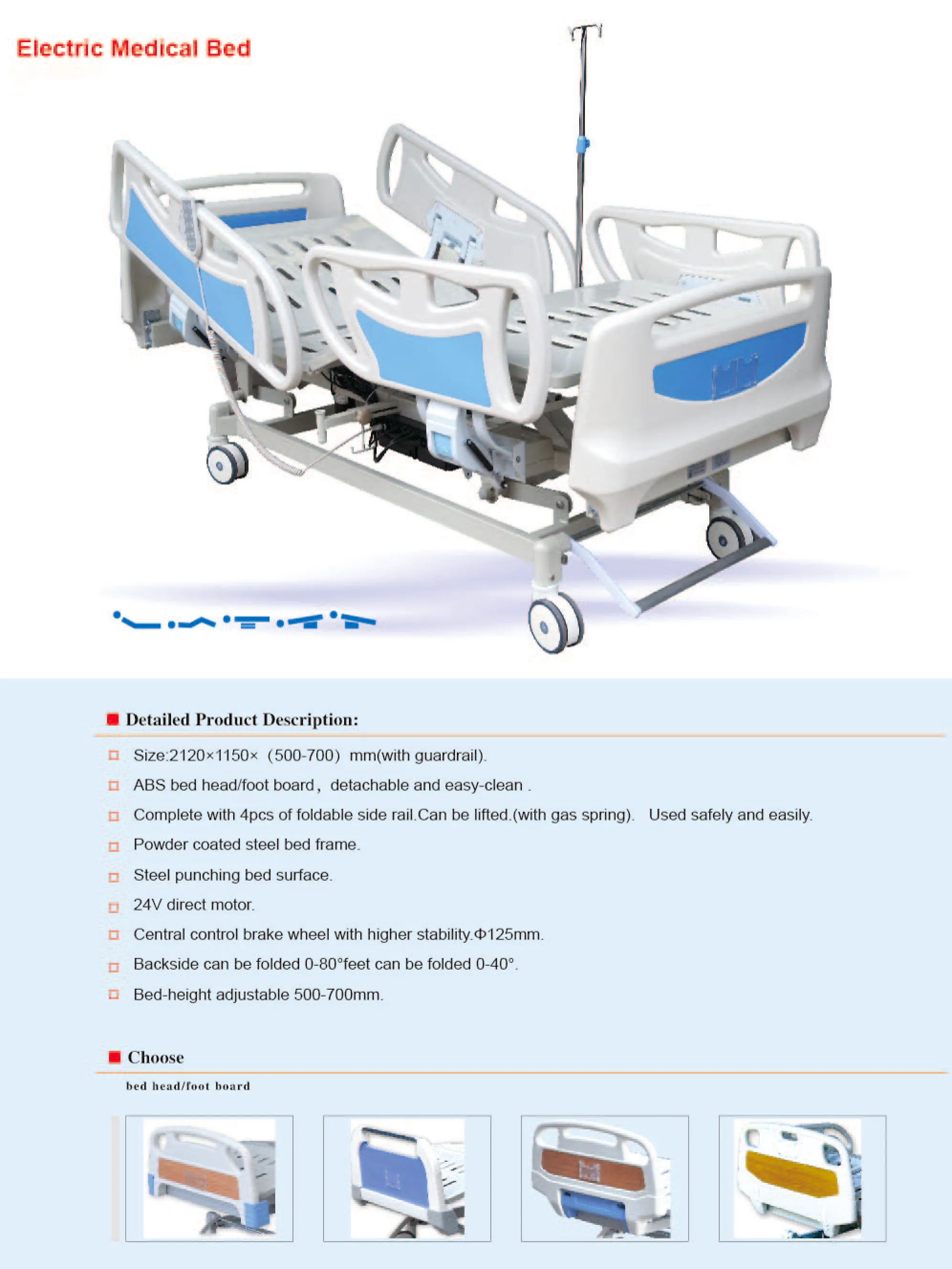
fully electric hospital bed
A fully electric hospital bed is a powered patient care platform designed to improve comfort, positioning, safety, and daily clinical work. A fully electric hospital bed uses motors and a handheld or side-mounted controller to adjust the backrest, knee section, overall height, and often the bed angle. A fully electric hospital bed lets patients or caregivers make smooth changes without manual cranking. Most models include a strong steel frame, a pressure-support mattress platform, locking casters, protective side rails, and a lifting capacity suited to routine hospital care. A fully electric hospital bed may also include a CPR release, emergency lowering system, drainage bag holders, an IV pole socket, and removable head and foot boards. A fully electric hospital bed supports safer transfers because staff can raise the sleeping surface to a comfortable working level. Lowering the frame helps patients enter or leave the bed with less effort. The fully electric hospital bed can raise the backrest for eating, reading, breathing support, or communication. It can lift the knees to improve posture and reduce sliding. A fully electric hospital bed with trendelenburg or reverse trendelenburg positioning gives trained staff additional support during selected procedures. Fully electric hospital bed controls may include a nurse lockout function that limits patient access to selected movements. A fully electric hospital bed can also use angle indicators, battery backup, weighing systems, exit alarms, and integrated lighting. These features make the fully electric hospital bed suitable for acute wards, rehabilitation rooms, long-term care, recovery centers, and home healthcare. Buyers should compare dimensions, safe working load, motor quality, rail design, cleaning access, warranty terms, and replacement parts before choosing a fully electric hospital bed.

 EN