
 EN
EN

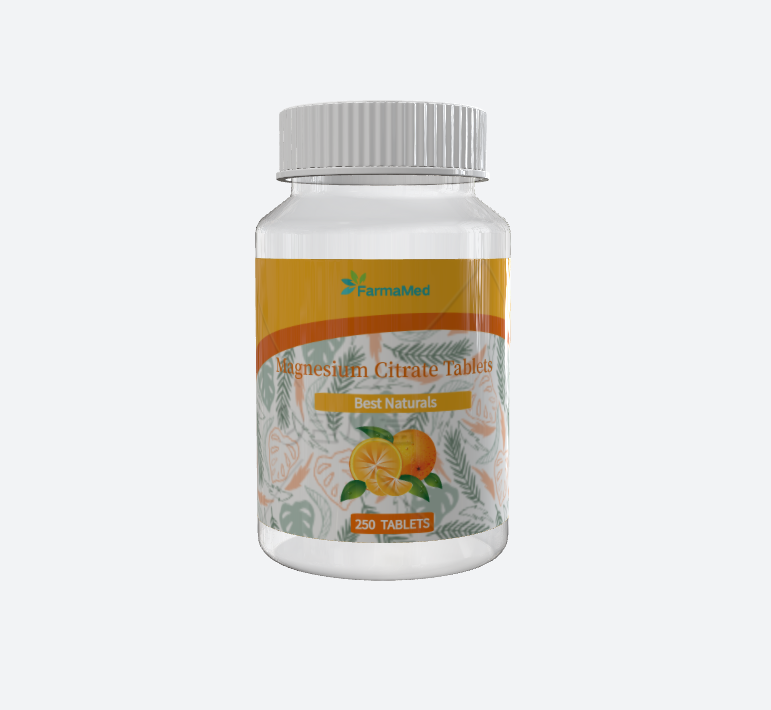
When procuring magnesium citrate tablets for commercial distribution or private label manufacturing, B2B buyers must establish comprehensive Certificate of Analysis (COA) requirements that ensure product quality, regulatory compliance, and customer safety. The specific parameters requested in COA documentation directly impact the marketability, efficacy, and legal standing of magnesium citrate tablets in competitive supplement markets.

Effective COA parameter selection for magnesium citrate tablets requires understanding both mandatory testing requirements and optional quality indicators that differentiate premium products from basic formulations. B2B buyers who specify comprehensive COA parameters gain significant advantages in quality assurance, risk mitigation, and downstream customer satisfaction while ensuring their procurement decisions align with regulatory standards and market expectations.
Essential Chemical Composition Parameters
Magnesium Content Verification
The primary COA parameter for magnesium citrate tablets centers on elemental magnesium content, typically expressed as milligrams per tablet or percentage by weight. B2B buyers should request both assay testing and uniformity of dosage testing to verify that each tablet delivers the labeled magnesium amount consistently. Standard specifications require elemental magnesium content to fall within 90-110% of the declared value, with individual tablet variation not exceeding plus or minus 10% of the average content.
Quality-focused buyers often specify additional testing for magnesium bioavailability markers, including dissolution profiles that demonstrate how effectively the magnesium citrate releases in simulated gastric and intestinal environments. These parameters become particularly important when targeting health-conscious consumers who prioritize absorption efficiency in their magnesium citrate tablets selection.
Citrate Complex Stability
The citrate portion of magnesium citrate tablets requires specific COA parameters to confirm proper chelation and stability. B2B buyers should request testing for citric acid content, pH levels, and chelation efficiency to ensure the magnesium-citrate complex remains intact throughout the product shelf life. Optimal citrate complex stability typically requires pH ranges between 3.5 and 5.5, depending on the specific formulation approach.
Advanced COA specifications may include thermal stability testing and accelerated aging studies that predict how the citrate complex will perform under various storage conditions. These parameters help B2B buyers assess whether their magnesium citrate tablets will maintain potency and effectiveness during distribution and retail storage periods.
Physical Quality and Manufacturing Standards
Tablet Integrity and Appearance
Physical COA parameters for magnesium citrate tablets must address tablet hardness, friability, and dimensional consistency to ensure product durability during shipping and handling. Industry standards typically require tablet hardness between 4-8 kiloponds and friability levels below 1% to prevent breakage and powder formation during normal handling procedures.
Visual inspection parameters should specify acceptable color ranges, surface smoothness standards, and defect tolerances for magnesium citrate tablets. B2B buyers often include photographic references in their COA requirements to establish clear quality benchmarks that manufacturing partners can consistently achieve across production batches.
Disintegration and Dissolution Performance
Disintegration testing represents a critical COA parameter that directly impacts the therapeutic effectiveness of magnesium citrate tablets. Standard requirements typically specify disintegration times under 30 minutes in 37°C water, though some formulations may require faster or slower release profiles depending on intended applications and target demographics.
Dissolution testing provides more detailed insight into how magnesium citrate tablets release their active ingredients over time. B2B buyers should request dissolution profiles at multiple time points, typically 15, 30, 45, and 60 minutes, with acceptance criteria that ensure at least 80% of the labeled magnesium content dissolves within the specified timeframe.
Microbiological Safety and Contamination Control
Pathogen Detection Requirements
Microbiological COA parameters for magnesium citrate tablets must address both pathogenic organisms and total microbial counts to ensure consumer safety and regulatory compliance. Standard pathogen testing should include screening for Salmonella species, Escherichia coli, Staphylococcus aureus, and Clostridium species, with acceptance criteria requiring complete absence of these dangerous microorganisms.
Total aerobic microbial count testing provides additional safety assurance for magnesium citrate tablets, with industry standards typically accepting no more than 1000 colony-forming units per gram for finished tablet products. Yeast and mold counts should remain below 100 CFU/g to prevent spoilage and maintain product stability throughout the intended shelf life.
Heavy Metal and Toxic Element Screening
Heavy metal contamination represents a significant concern for magnesium citrate tablets, particularly given the mineral nature of the primary ingredient. B2B buyers should specify COA testing for lead, mercury, cadmium, and arsenic, with acceptance limits aligning with current regulatory standards such as USP <232> or European Pharmacopoeia guidelines.
Additional toxic element screening may include testing for aluminum, nickel, and chromium, particularly when magnesium citrate tablets target sensitive populations such as pregnant women or individuals with compromised kidney function. These expanded COA parameters help B2B buyers demonstrate due diligence in product safety and quality assurance.
Regulatory Compliance and Documentation Standards
Good Manufacturing Practice Verification
COA documentation for magnesium citrate tablets should include verification of Good Manufacturing Practice compliance throughout the production process. B2B buyers typically request manufacturing facility certifications, quality system audit results, and batch record documentation that demonstrates consistent adherence to established quality standards.
Traceability documentation represents another essential COA component, requiring complete ingredient sourcing records, manufacturing date stamps, and lot number tracking that enables rapid response to potential quality issues. This documentation becomes particularly important for magnesium citrate tablets distributed across multiple markets with varying regulatory requirements.
Label Claim Verification
COA parameters must verify that finished magnesium citrate tablets accurately reflect all label claims, including serving size, magnesium content per serving, and any additional nutritional or therapeutic claims. Testing should confirm that actual product composition aligns with declared values within acceptable analytical tolerances.
Nutritional labeling verification may require additional testing for calories, carbohydrates, and sodium content, particularly when magnesium citrate tablets include excipients or flavoring agents that contribute to these nutritional components. Accurate label claim verification protects B2B buyers from regulatory violations and consumer trust issues.
Stability and Shelf Life Validation
Accelerated Stability Testing
Stability COA parameters for magnesium citrate tablets should demonstrate product integrity under accelerated aging conditions that predict real-world storage performance. Standard accelerated stability testing typically involves exposure to elevated temperature and humidity conditions for predetermined periods, with regular testing to monitor potency retention and physical stability.
Real-time stability data provides additional validation for magnesium citrate tablets, requiring ongoing monitoring under normal storage conditions to confirm that accelerated testing predictions align with actual product performance. B2B buyers should specify minimum stability periods that align with their intended distribution timelines and retail shelf requirements.
Package Integrity and Barrier Properties
Packaging-related COA parameters help ensure that magnesium citrate tablets maintain their quality throughout the distribution chain. Testing should include moisture barrier effectiveness, oxygen permeability rates, and package seal integrity to prevent environmental contamination that could compromise product stability.
Light protection testing may be necessary for magnesium citrate tablets sensitive to photodegradation, requiring packaging materials that provide adequate UV protection while maintaining cost-effectiveness for B2B buyers. These COA parameters help optimize packaging selection and storage recommendations for maximum product longevity.
FAQ
How frequently should COA testing be performed for magnesium citrate tablets?
COA testing for magnesium citrate tablets should be performed on every manufacturing batch, with some parameters requiring more frequent monitoring. Critical safety parameters like microbiological testing and heavy metal screening must be completed for each batch, while stability testing can be performed on representative batches according to established sampling plans. Most B2B buyers require batch-specific COA documentation before accepting shipments.
What are the most common COA parameter failures for magnesium citrate tablets?
The most frequent COA failures for magnesium citrate tablets typically involve potency variations, dissolution performance issues, and microbiological contamination. Magnesium content variations often result from inconsistent raw material quality or manufacturing process controls, while dissolution failures may indicate formulation problems or inadequate tablet compression parameters. Microbiological issues usually stem from insufficient environmental controls during manufacturing or packaging operations.
Can B2B buyers request custom COA parameters beyond standard requirements?
B2B buyers can definitely request custom COA parameters for magnesium citrate tablets to address specific market requirements or quality concerns. Common custom parameters include allergen testing, organic certification verification, specific heavy metal limits below regulatory minimums, or additional stability testing under unique storage conditions. However, custom testing may increase costs and lead times, so buyers should balance additional assurance benefits against commercial considerations.
How do COA parameters differ between pharmaceutical-grade and dietary supplement magnesium citrate tablets?
Pharmaceutical-grade magnesium citrate tablets typically require more stringent COA parameters, including lower microbial limits, tighter potency tolerances, and more extensive stability testing compared to dietary supplement versions. Pharmaceutical applications may require additional parameters like endotoxin testing, sterility verification, and more comprehensive dissolution profiling. Dietary supplement COA parameters still ensure safety and quality but generally allow broader acceptable ranges for certain specifications while maintaining consumer protection standards.
Table of Contents
- Essential Chemical Composition Parameters
- Physical Quality and Manufacturing Standards
- Microbiological Safety and Contamination Control
- Regulatory Compliance and Documentation Standards
- Stability and Shelf Life Validation
-
FAQ
- How frequently should COA testing be performed for magnesium citrate tablets?
- What are the most common COA parameter failures for magnesium citrate tablets?
- Can B2B buyers request custom COA parameters beyond standard requirements?
- How do COA parameters differ between pharmaceutical-grade and dietary supplement magnesium citrate tablets?