Get a Free Quote

Our representative will contact you soon.
Name
Email
Tel
Company Name
Message
0/1000
rewinding or slitting machine-0

Home > 

rewinding or slitting machine

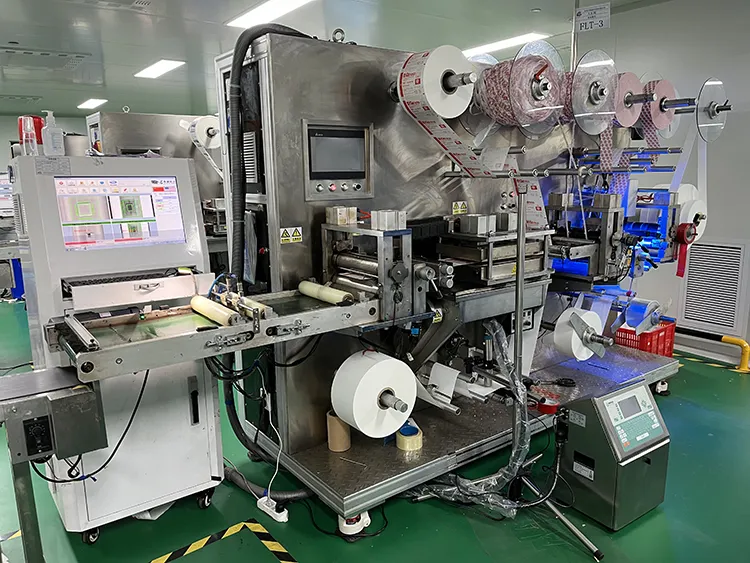
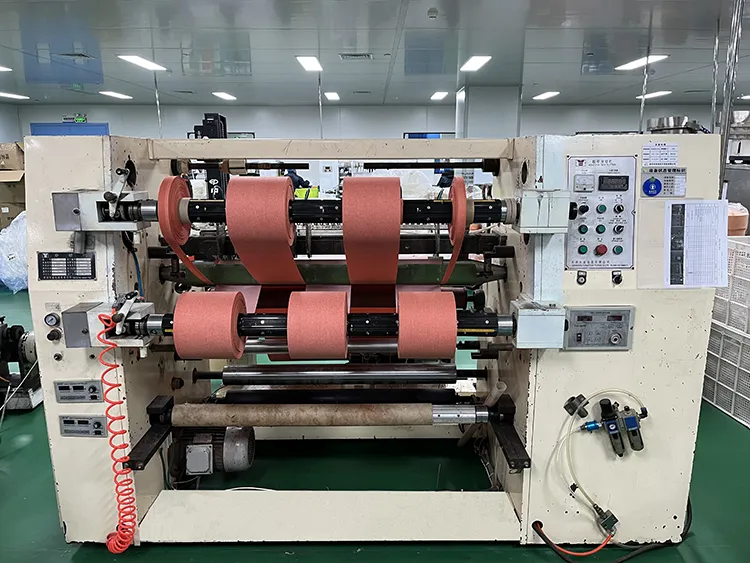
A rewinding or slitting machine is production equipment that converts wide rolls of flexible material into narrower rolls or finished reels. A rewinding or slitting machine unwinds a parent roll, cuts it into selected widths, and rewinds each strip onto separate cores. Depending on the design, a rewinding or slitting machine can process paper, plastic film, aluminum foil, laminated materials, labels, nonwoven fabric, and other web products. The main controls set roll width, cutting position, winding tension, speed, and finished diameter. A rewinding or slitting machine uses circular knives, razor blades, shear knives, or crush-cut tools to create clean edges. Many models include automatic tension control, edge guiding, shaft loading, roll unloading, and programmable recipes. A modern rewinding or slitting machine may also use servo motors, touch-screen controls, sensors, and digital monitoring to keep production stable. These features help a rewinding or slitting machine maintain consistent roll hardness and reduce waste caused by wrinkles, telescoping, or uneven edges. Some configurations add inspection cameras, dust removal, automatic knife positioning, differential shafts, and packaging stations. A rewinding or slitting machine suits manufacturers that need repeatable widths and reliable roll quality without replacing an entire converting line. It can operate as a standalone unit or connect with printing, coating, laminating, extrusion, and bag-making equipment. Buyers should match a rewinding or slitting machine to material thickness, roll diameter, web width, speed, core size, and required accuracy. The right rewinding or slitting machine supports efficient converting from incoming master rolls to customer-ready products.

New Product Releases

The main advantage of a rewinding or slitting machine is better control over finished roll size. A rewinding or slitting machine lets operators produce several market-ready widths from one parent roll, which can reduce purchasing costs and improve material utilization. A rewinding or slitting machine also helps businesses respond to different customer orders without buying separate stock for every width. Its adjustable settings make changeovers practical for short, medium, and long production runs. With accurate cutting, a rewinding or slitting machine creates cleaner edges and fewer defective rolls. This improves appearance, reduces complaints, and limits the amount of material sent to recycling. Automatic tension control helps the rewinding or slitting machine form firm, even rolls that unwind smoothly during later printing, packing, or filling operations. Better winding quality can prevent loose layers, wrinkles, and damaged edges during transport. A rewinding or slitting machine with recipe storage allows teams to repeat proven settings, reducing setup time and dependence on individual operator experience. Servo drives and responsive sensors can support faster running while maintaining stable results. For safety and labor efficiency, a rewinding or slitting machine may include guarded cutting areas, automatic roll handling, and simple touchscreen instructions. These features reduce manual lifting and make routine operation easier to learn. Application suitability matters when selecting equipment. A compact rewinding or slitting machine may suit converters with limited floor space, while a heavy-duty model fits thick films, foil, or large rolls. A rewinding or slitting machine with inspection and counting functions is useful when quality records matter. Buyers should compare maximum web width, minimum slit width, speed, material range, core system, automation level, service support, and spare-part availability. Choosing a rewinding or slitting machine around actual production needs creates value without paying for unnecessary capacity. Overall, the rewinding or slitting machine improves flexibility, consistency, labor use, and delivery performance.

Latest News

Southeast Asian OTC pharmacy chains sourcing dimenhydrinate: multilingual packaging design required.

15

Jul

Southeast Asian OTC pharmacy chains sourcing dimenhydrinate: multilingual packaging design required.

Southeast Asian over-the-counter pharmacy chains face unique challenges when sourcing dimenhydrinate products, particularly regarding multilingual packaging requirements that meet diverse regulatory standards across the region. The growing demand for...
View More
How to verify eye drop sterility assurance through third-party test reports in B2B procurement?

10

Aug

How to verify eye drop sterility assurance through third-party test reports in B2B procurement?

Verifying the sterility and safety of lubricant eye drops is one of the most critical responsibilities in B2B procurement. When sourcing lubricant eye drops for clinical use, distribution, or institutional settings, relying solely on supplier claims ...
View More
The rise of plant-based retinol: global procurement growth of bakuchiol under the clean beauty trend.

29

Sep

The rise of plant-based retinol: global procurement growth of bakuchiol under the clean beauty trend.

The global beauty industry is experiencing a significant shift toward plant-based alternatives, and pure bakuchiol has emerged as one of the most sought-after ingredients in this transformation. As consumers increasingly demand clean, sustainable pro...
View More
How to select high-purity naringin dihydrochalcone for bitter masking procurement?

05

Oct

How to select high-purity naringin dihydrochalcone for bitter masking procurement?

Selecting the right naringin naringenin for bitter masking in pharmaceutical formulations requires careful evaluation of purity standards, supplier reliability, and functional performance metrics. The effectiveness of naringin naringenin in masking u...
View More

Get a Free Quote

Our representative will contact you soon.
Name
Email
Tel
Company Name
Message
0/1000

rewinding or slitting machine

Accurate Width Control for Flexible Production

Accurate Width Control for Flexible Production

A key strength of a rewinding or slitting machine is its ability to create precise widths from one wide master roll. A rewinding or slitting machine uses adjustable knife positions and guided web travel to keep each strip aligned throughout the run. This accuracy matters when customers require exact reel dimensions for packaging, labels, medical products, or industrial films. Instead of relying on manual trimming, a rewinding or slitting machine delivers repeatable results across multiple orders. Digital recipes can save width, tension, speed, and core settings, allowing operators to recall a job quickly. A rewinding or slitting machine therefore supports efficient short runs as well as continuous production. Accurate cutting also protects downstream equipment because clean edges feed more smoothly into printers, pouch makers, coaters, and filling lines. For buyers, the value is practical: less setup waste, fewer rejected reels, and greater confidence that every shipment meets its specification. The rewinding or slitting machine becomes a flexible production tool rather than a single-purpose cutter.
Stable Tension and High-Quality Reels

Stable Tension and High-Quality Reels

Consistent winding is another important selling point of a rewinding or slitting machine. During operation, a rewinding or slitting machine controls web tension as material moves from the parent roll to smaller reels. Sensors and drive systems can adjust power when the roll diameter changes, helping maintain even pressure from the first layer to the last. This function helps a rewinding or slitting machine prevent wrinkles, loose winding, air pockets, and side movement. The resulting reels are easier to store, transport, and use on later equipment. For film, foil, paper, and laminated webs, stable winding can protect surface quality and reduce damage at the edges. A rewinding or slitting machine may also offer differential shafts or automatic pressure settings for materials with different thicknesses and stretch levels. Buyers gain more than a neat appearance. A rewinding or slitting machine can reduce rework, improve line uptime, and deliver a product that performs predictably in the customer’s process. Reliable reel formation also supports stronger brand quality and fewer service issues.
Automation That Reduces Work and Waste

Automation That Reduces Work and Waste

A well-equipped rewinding or slitting machine can simplify daily production through practical automation. An automatic rewinding or slitting machine may position knives, control tension, guide the web, count length, and stop at a programmed diameter. These functions let operators focus on supervision and quality checks instead of constant manual adjustment. A rewinding or slitting machine with a touchscreen can display speed, roll status, alarms, and stored job data in a clear format. Automatic shaft handling or unloading can further reduce lifting and shorten the time between rolls. When settings remain consistent, a rewinding or slitting machine uses less trial material during setup and produces fewer off-specification reels. This advantage is valuable for converters handling many product sizes or frequent customer changes. A rewinding or slitting machine can also connect with inspection systems, printing lines, coating units, or factory data platforms as production needs grow. Buyers should choose automation that matches their workforce, output goals, and budget. The right rewinding or slitting machine improves safety, repeatability, and throughput without making operation unnecessarily complex.

Get a Free Quote

Our representative will contact you soon.
Name
Email
Tel
Company Name
Message
0/1000

Get a Free Quote

Our representative will contact you soon.
Name
Email
Tel
Company Name
Message
0/1000